Film and series watch trackers for a 2027 bullet journal
Photo: ddio / Wikimedia Commons, CC BY-SA 2.0
Film and series watch trackers do two jobs, and a 2027 notebook works best when each job gets its own page: a forward list of what you want to see, and a log of what you finished. Set them facing each other and the year lives on one spread.
Everything below is ruled with a pencil, a ruler and whatever pen you already use. Keep books off these pages and park them in a 2027 reading tracker, then let this spread stay with films and series.
Rule a watchlist and a film log on facing pages
The watchlist is a queue. The log is a record. Merging them fills the queue with things you already watched and clutters the log with things you never will.
For the watchlist page, divide the usable width into ten equal units:
- 1 unit: tick box at the left edge, drawn as a small square.
- 5 units: title line.
- 2 units: year or director, so a remake never gets confused with the original.
- 2 units: who or what put it on the list — a friend, a festival, a recommendation thread.
Rule 20 to 25 rows and leave the bottom four lines blank for mid-year additions. Skip a where-to-watch column; that information changes faster than a notebook does.
The log page opposite uses the same ten units in a different split: date watched (2), title (4), format (1), rating (2), rewatch flag (1). The format column holds one letter — T for theater, H for home, F for a festival or event screening — and the rewatch flag is a dot you fill in if you have seen it before. A year of entries then shows how much of your watching was new.
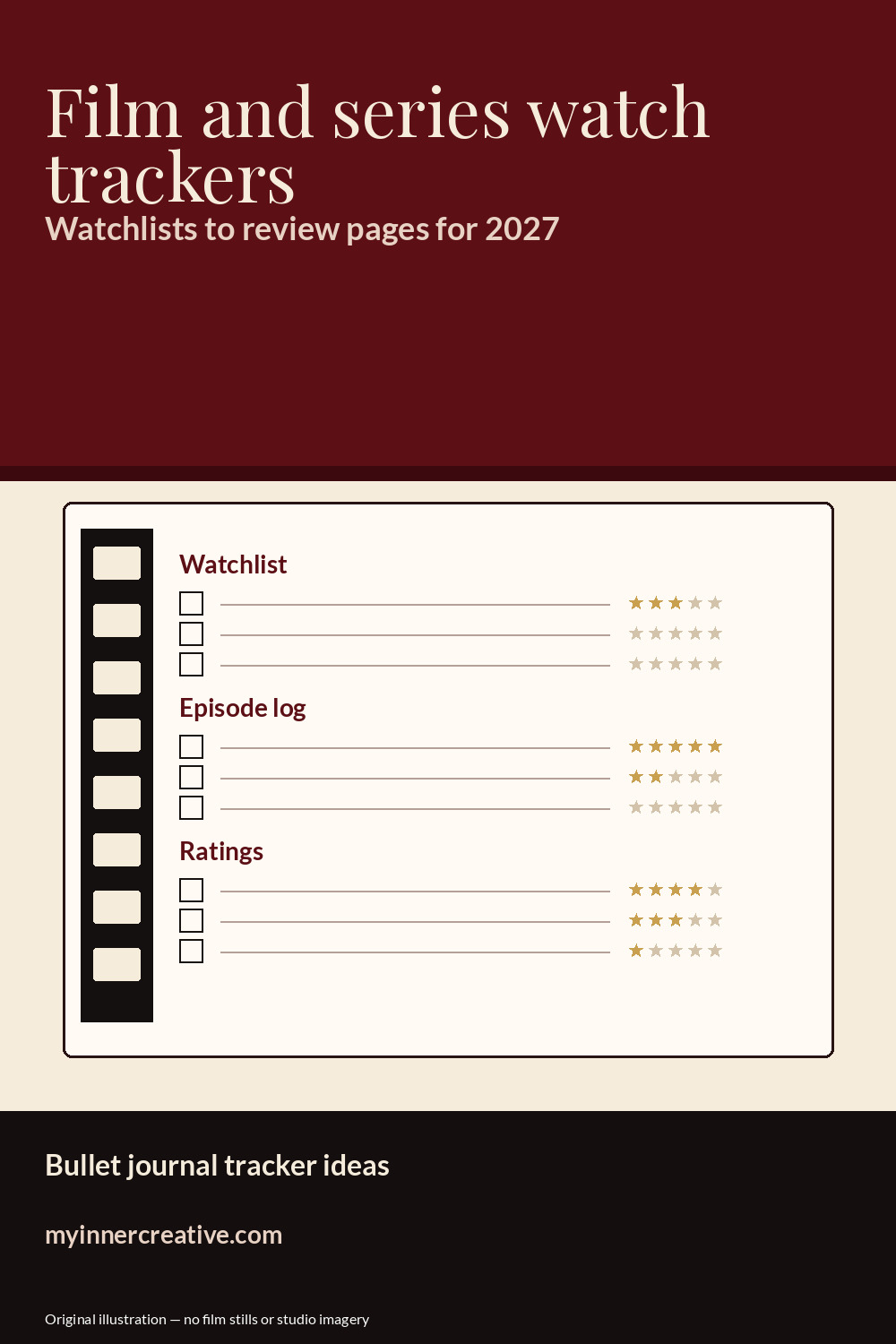
For a border that reads as film without copying anyone’s artwork, draw a band five dots wide down the outer edge of each page, divide it into equal squares, and notch two small sprocket holes at the top and bottom of every square. Color in one square per film logged. By December the strip counts the year for you.
Two habits keep the spread accurate: log the film the same night, and move a watchlist line across to the log only after the tick box is filled. For other formats that could sit alongside it, scan a set of tracker and spread layouts before committing ink.
Build a season and episode grid for series
Series need a different shape, because the unit is the episode, not the title. A grid handles that with almost no writing.
Give each series a block of its own:
- Write the title on the left in a column four units wide.
- To its right, rule a row of small squares, one per episode, grouped in blocks of five with a hairline gap, so a run of episode 1–6 or episode 1–22 counts at a glance.
- Number only every fifth box above the row.
- Add a second row underneath for the next season, indented slightly, with the season number in a circle at the far left.
Fill a box when you finish an episode. A key lets the grid carry status as well as progress: a solid box for watched, a diagonal line for started and abandoned, an outlined box for an episode watched out of order, a corner dot for one to rewatch. Write the key once at the top of the page and keep it identical all year.
Two columns at the right edge earn their space: date started and date finished. Those dates record how you watch — six weeks of one episode a night, or a weekend that swallowed a season.
For a long-running show, one continuous strip of 100 boxes reads better than season-by-season blocks; mark season breaks with a vertical line through the grid. The same box grid sits behind most habit tracker layouts for 2027, and it works here for the same reason: a filled box is faster than a sentence.
Set a rating scale and a review page you will fill in
A rating is only useful if it means the same thing in March as it did in January. Draw five small circles in the rating column, allow half a circle, and write the definitions once at the front of the section:
- 5: would rewatch this year.
- 4: would recommend without caveats.
- 3: glad you watched it once.
- 2: finished it, would not return.
- 1: stopped caring before the end.
Stars, circles or a 1–5 numeral all work. What matters is that the scale is written down, because an undefined five-star column drifts upward over a year.
Review pages fail when they ask for a paragraph. Ask for less. Rule a page into four or six equal boxes with a fixed internal structure: title and date on the top line, rating circles in the top right corner, then three prompts with one ruled line each — one line on the story, one on how it looked or sounded, one on whether you would watch it again. Six films per page, and the page fills.
Close the section with a year-end spread while the logs are fresh. Tally films per month as a bar chart, twelve columns, one square per film, using the same box size as the episode grid so the pages match. Underneath, list a top five, a best first watch, a best rewatch and one line on what you want more of in 2028 — the line that makes next year’s watchlist easier to start.