
Bubble wrap on a cold window is cheap draft-proofing, and the roughly 30% figure attached to it is a best case from one laboratory test: a sheet fixed to the frame of a single-glazed window. Sticking a sheet onto the glass alone, which is how the product is normally used, brought heat loss down by about 15% to 17% in the same test.
The numbers come from “Thermal Performance Evaluation of the Window Systems with Air-bubble Sheets”, published in September 2015 in the Korean Journal of Air-Conditioning and Refrigeration Engineering. The authors are Je Hwang, Ah Hee Jeong, Byung Heoun Jeon and Young Chull Ahn, with Ahn at Pusan National University as corresponding author.
“The maximum decrease of the U-value was measured as 1.092 when a sheet was attached onto the frame of single-glazed window,” the paper says. Set against an unmodified single-glazed U-value of 3.592 W/m²K, that is a fall of about 30.4%.
What people put bubble wrap on windows for, and how the 2015 test was run
Air-bubble sheet is sold as a winter fix for cold, single-glazed windows, where the glass is the weak point in the wall. The paper’s introduction describes the usual household method: spray water on the pane and stick the sheet to it.
The laboratory work followed KS F 2278, the Korean standard for measuring window thermal transmittance. Test specimens were sliding windows measuring 1,000 mm by 1,000 mm, in two builds:
- Single glazing, 5 mm glass
- Double glazing, 5 mm glass with a 6 mm air gap and a second 5 mm pane
Three commercial air-bubble sheets were tested, each with a different air volume: large circular bubbles, squarish bubbles and small circular bubbles. Each was tested attached to the glazing and attached to the frame, so the two methods could be compared on the same window.
The measured quantity is U-value, in watts per square meter per kelvin. It describes heat loss through the window assembly, and lower is better. It is not a measure of a household energy bill.
The numbers: 3.592 down to about 2.5 at best
Bare, the two windows measured 3.592 W/m²K for single glazing and 2.908 W/m²K for double glazing. The sheets moved those figures by very different amounts depending on where they went.
- Single glazing, sheet on the frame: U-value fell by 1.082 to 1.092 W/m²K, about 30%
- Single glazing, sheet on the glass: U-value fell by 0.551 to 0.617 W/m²K, about 15% to 17%
- Double glazing, sheet on the frame: U-value fell by 0.639 to 0.652 W/m²K, about 22%
- Double glazing, sheet on the glass: U-value fell by only 0.102 to 0.113 W/m²K, roughly 3.5% to 4%
Taken at face value, the single-glazed window with a sheet over the frame landed near 2.5 W/m²K, below the 2.908 W/m²K recorded for the bare double-glazed unit. That is a comparison between two test specimens in a chamber, not an argument for skipping a glazing upgrade.
On the paper’s direct comparison, frame attachment beat glass attachment by 0.475 to 0.539 W/m²K. The authors suggest that covering the frame limits air movement at the gaps and forms an air layer.
Bubble shape made a small difference. The squarish sheet, which held the largest air volume, gave a U-value about 0.01 to 0.06 W/m²K lower than the circular-bubble sheets.
Layering was tested too. Two sheets on the indoor side of the glass, facing the thermostatic chamber, outperformed one sheet on each side of the pane. Two indoor layers on the glass still did less than a single layer applied to the frame.
Before taping a sheet to the glass this winter
The headline to avoid is a 30% cut in heating costs. The study measured heat flow through a 1 m by 1 m window in a chamber, and a window is one part of a building’s heat loss. Nothing in the paper links the sheets to a bill.
The practical points that follow from the measurements:
- Coverage over the frame did more than coverage of the glass alone, on both window types
- Glass-only application on single glazing was worth about 15% to 17%, a real result, well short of 30%
- On double glazing, a sheet on the glass changed the U-value by about 0.1 W/m²K, close to nothing in practice
- If layers are going up, two on the indoor face beat one inside and one outside
Placement mattered more than product choice. Bubble shape shifted the U-value by hundredths of a watt per square meter per kelvin, while moving the same sheet from the glass to the frame shifted it by roughly half a watt.
The pattern matches what the windows started with. Single glazing had the most heat loss to give back, so the sheets did most there. A double-glazed unit already has its own sealed air gap, and adding bubbles to the inner pane adds little to that.
Frame coverage also means covering more than the glass. The study reports U-values for the tested configurations, and it does not give air-bubble sheets a fire-safety all-clear, so treat the result as a thermal measurement rather than a general verdict on the material.
If winter window work also includes seasonal decorating or DIY around the house, two related My Inner Creative guides cover which paint pens stick and seal on glass and household surfaces and how to make paper Christmas garlands to hang across a room or window.
For anyone deciding where to spend 20 minutes and a roll of sheet this week, the test points at the worst window in the house: a single-glazed sliding unit, with the sheet taken out over the frame and not stopped at the edge of the glass.
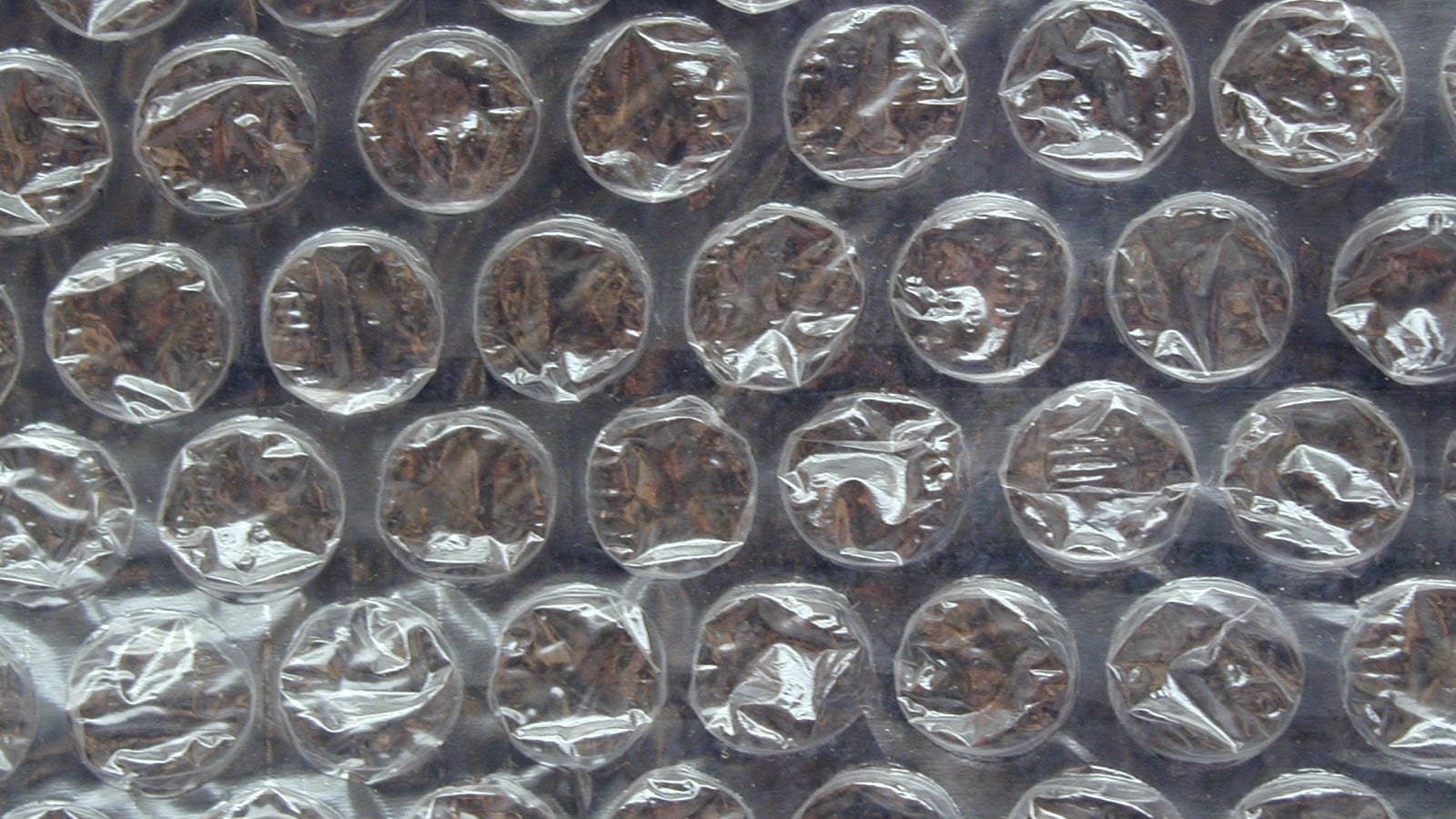
Featured image and Pinterest pin: close-up of air-bubble packing film, not a photograph of bubble wrap taped to a window. Photo: Consequencefree, CC BY-SA 3.0, via Wikimedia Commons. Share-alike: derivatives must use the same licence.