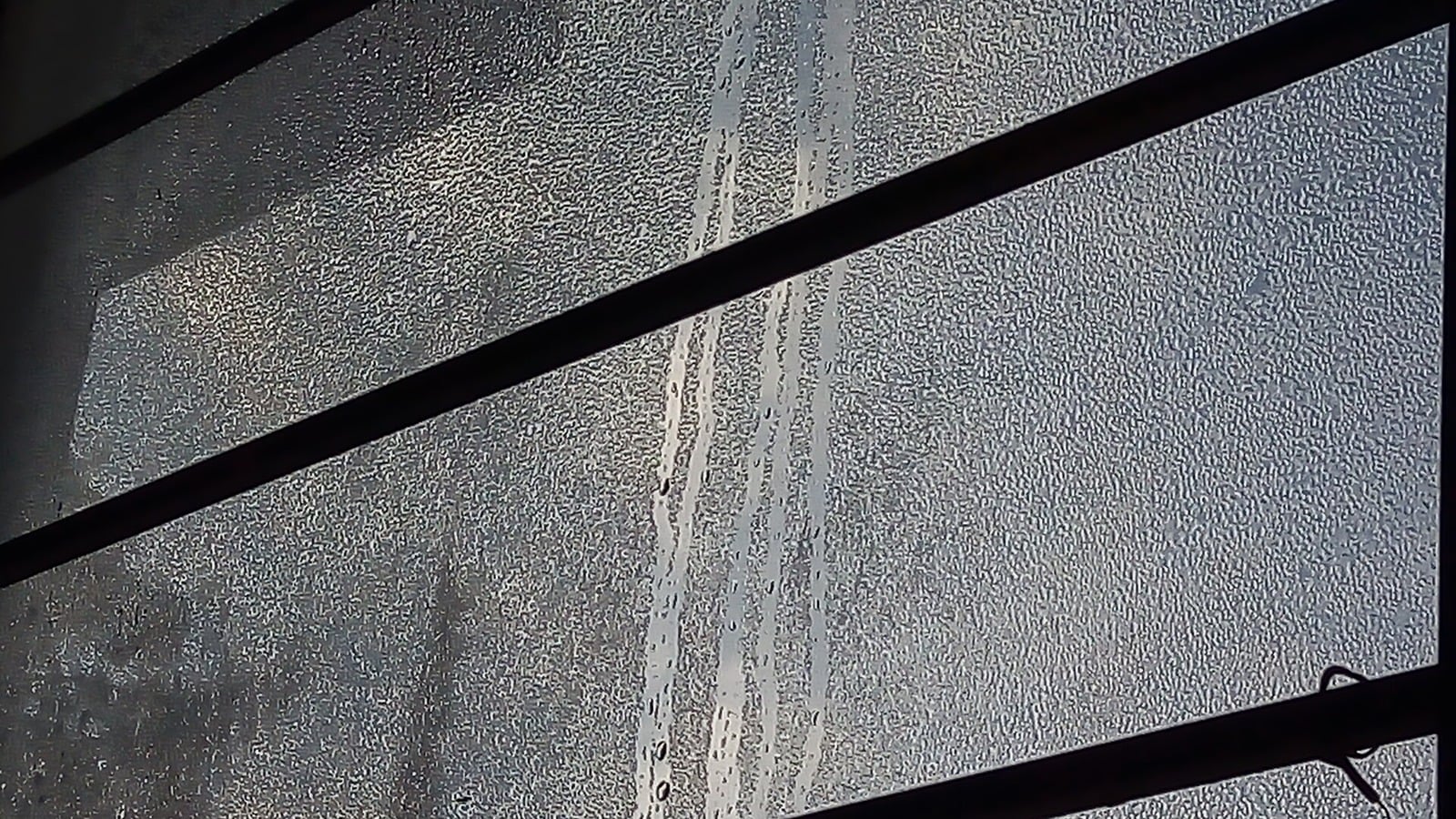
A squirt of washing-up liquid wiped across cold glass really does make the morning condensation disappear from view. It does not stop the condensation forming, and it does not take a single drop of moisture out of the room. The water is still sitting on the pane, flattened into a film thin enough to see straight through.
The idea spread from an Instagram video. Netmums reported on 17 October 2026 on the claim that a wipe of washing-up liquid over the inside of the windows leaves clear glass by morning.
What the soap film actually does to the water
Writing for Good Housekeeping UK on 11 November 2026, Katie Mortram said the trick “works by reducing the surface tension of the water, a bit like rinse aid”.
That is the whole mechanism. A surfactant film stops water pulling itself into beads. Instead of forming droplets that run down the glass and pool on the sill, the moisture spreads out flat and reads as clear.
Mortram was blunt about what that leaves behind. The glass “isn’t technically bone dry”, she said, because the water has only changed shape.
Condensation appears when warm, damp indoor air meets a surface cold enough to take it below its dew point. Soap does nothing to that process. It alters how the water sits on the glass, not how much water the air is carrying.
The effect is also short-lived. Wipe the pane, let the coating break down or wash the window, and the beads come back. Good Housekeeping’s point stands in the meantime: the hack is not fixing the moisture in the air.
That moisture has to go somewhere. Netmums says the damp air stays in the room and can settle on colder walls and ceilings, where mould can grow.
Why glaziers warn it can damage the rubber seals
The second problem is what the soap touches on its way across the window. Netmums said: “Glazing specialists also warn that the chemicals in soap can wear down rubber window seals over time. Damaged seals can lead to failed double glazing and glass that stays permanently misted.”
The Mirror ran the same warning on 14 October 2026, reporting that window fitters and glazing specialists warn that the chemicals in soap “can degrade rubber window seals over time”.
Good Housekeeping told readers to keep washing-up liquid away from rubber window seals “as it could harden, crack and degrade them over time”. Checkatrade’s double glazing maintenance advice says to avoid washing-up liquid on frames “as it can degrade the rubber seals”.
Worth keeping the claim accurate. The warning is that soap can damage seals, not that it always ruins them. No official body, no government agency and no window maker backs the hack, Netmums said, so there is no long-term testing to point at either way.
The cost sits on the downside. Netmums says damaged seals can lead to failed double glazing and glass that stays permanently misted, which is a far bigger bill than a bottle of washing-up liquid.
The 10 minutes of airing a day that lowers the moisture
Good Housekeeping’s recommendation is ventilation, and the bar is low. Opening windows and doors, “even doing this for 10 minutes a day … will lower the moisture levels”, the magazine said.
Lower, not eliminate. Ten minutes of airing shifts damp air out of the house before it can condense on cold glass, but it is a daily habit, not a cure for a damp room.
Netmums, which cites Which? experts, sets out the rest of the routine, and Good Housekeeping and Checkatrade back parts of it:
- Wipe the glass and the sills every morning. Clean the glass and sills each morning, and wring the cloth out in the sink.
- Put lids on pans. Boiling uncovered sends steam straight into the kitchen.
- Run the extractor fan. Use it during cooking and bathing, and leave it running afterwards.
- Keep the heating steady. Netmums, citing Which?, says a steady temperature helps.
- Open the trickle vents. Checkatrade says trickle vents in double glazing help prevent condensation, as long as they are kept clean and unobstructed.
- Use a dehumidifier in the worst room. It pulls the water out of the air and collects it in a tank, which is the thing soap on the glass never does.
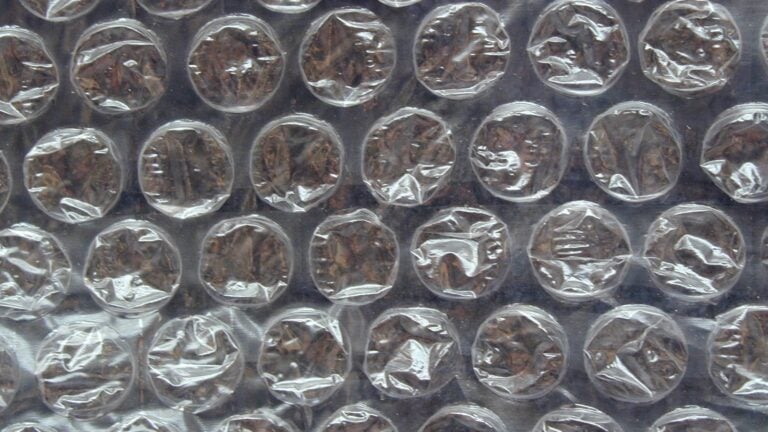
Cold glass is half of the equation, and that is a separate winter problem with its own fixes. For insulating the panes themselves, see this look at bubble wrap on windows.
Anyone still tempted by the bottle under the sink should at least keep it off the rubber. Washing-up liquid on the glass buys a clear view for a morning. The moisture stays in the house until ventilation, steady heating or a dehumidifier takes it out.
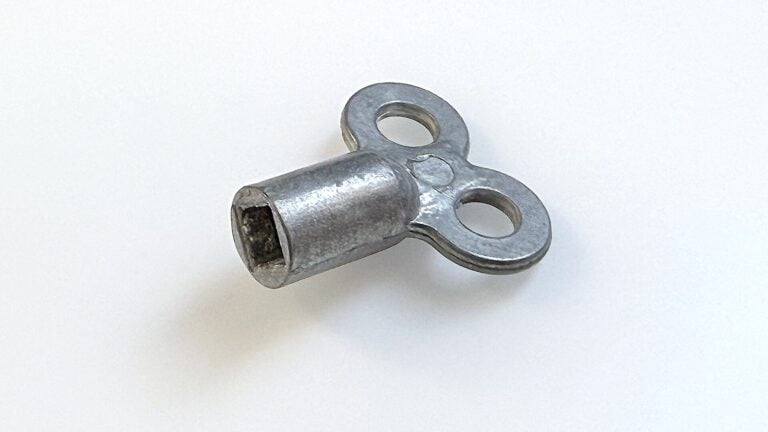
Heating is the other half of a cold house, and our guide to how to bleed a radiator with a 99p key covers the British Gas pressure check.
For another job at the window, see how to fold and cut paper snowflakes for windows.
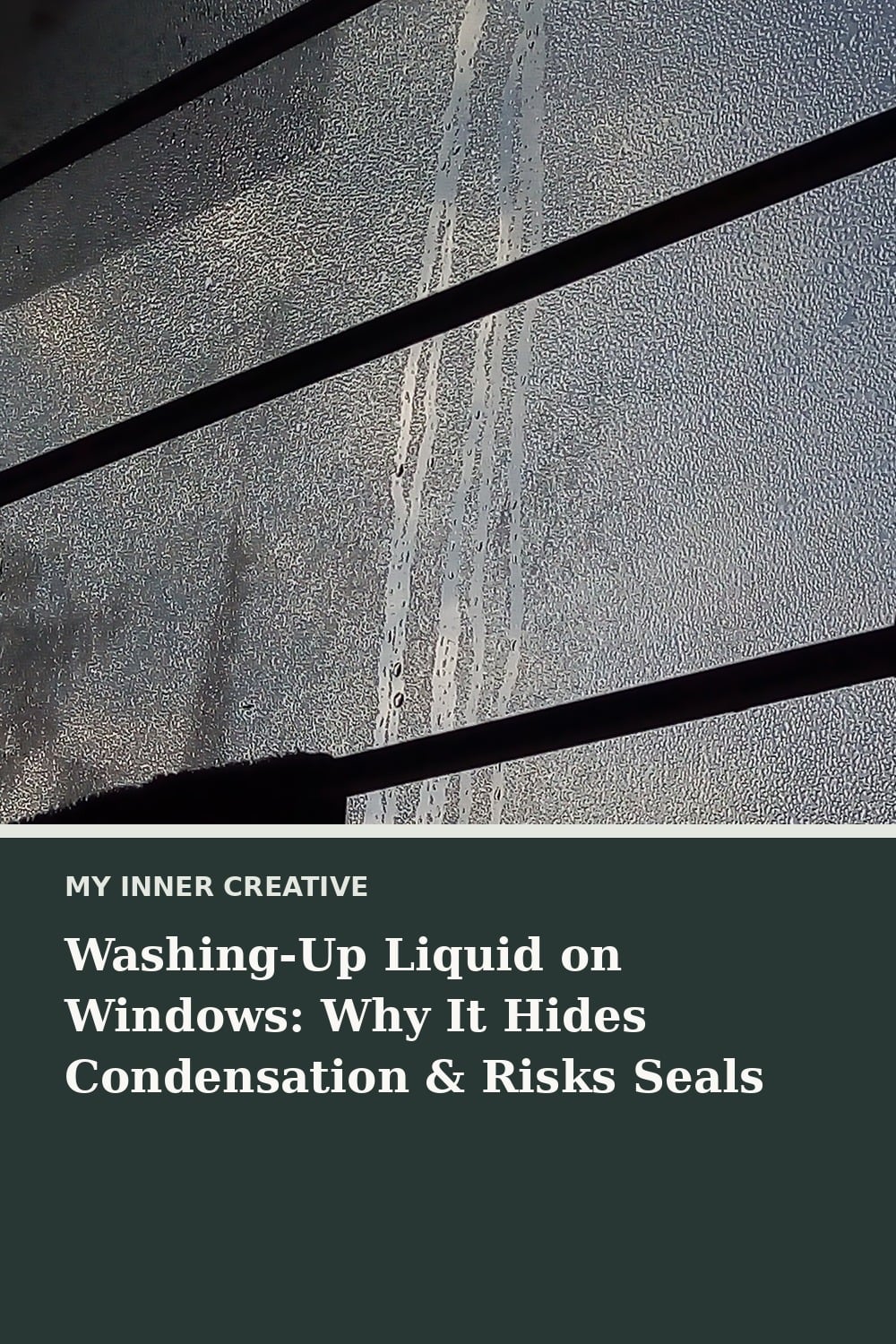
Featured image: heavy condensation droplets running down window glass. Photo: Doggo19292, Public domain, via Wikimedia Commons. Pinterest pin: typography added to a crop of the same photo.