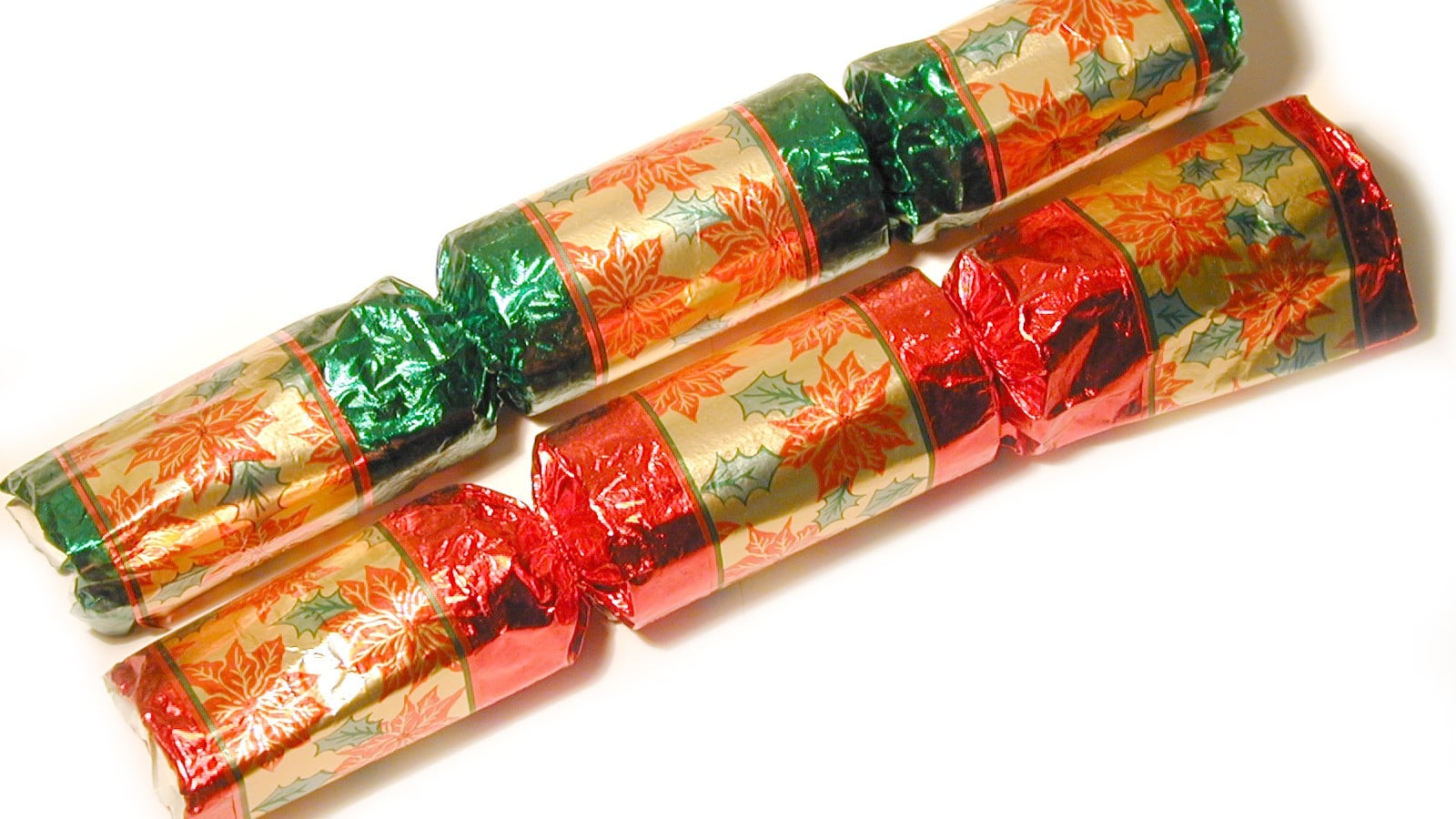
The paper size depends on whose instructions you follow. English Heritage calls for one sheet of decorative paper per cracker, around 36cm x 30cm. BBC Good Food cuts a 30 x 20cm rectangle of wrapping paper. House Beautiful starts from A4 patterned paper, wallpaper or plain paper. None of the three is presented as the official measurement.
What the guides do agree on is a short shared kit:
- A cardboard tube, most often an empty toilet roll
- A sheet of paper for the outside
- Glue, or tape used in its place
- Ribbon or string to tie each end
- A snap, if you want the bang
- Something to put inside
English Heritage credits the format to the English sweet maker Tom Smith, who took the idea from the French bon bon in the late 1840s. He added a snap later, inspired by a crackling fireplace, and swapped the sweets for small gifts. The paper hats came later again, introduced by his son Walter after he and his brothers took over the business in 1869.
Paper sizes and the materials each guide asks for
None of the three sizes is wrong. The sheet only has to wrap the tube and leave enough paper at each end to gather and tie. English Heritage gives the rule of thumb in plain terms, describing its sheet as about three and a half times longer than the toilet roll.
English Heritage lists:
- An empty cardboard toilet roll
- One sheet of decorative paper per cracker, around 36cm x 30cm, in wrapping paper or colorful crepe paper
- Scissors, a ruler and a pencil or pen
- Glue or double-sided sticky tape
- Ribbon or string
- Cracker snaps
- Decorations such as printed images, feathers, flowers or stickers
- A small gift for inside
BBC Good Food, in a guide by Roxanne Fisher, lists:
- Leftover thick wrapping paper, cut to a 30 x 20cm rectangle
- Empty toilet rolls
- Scissors
- A glue stick
- A cracker snapper strip
- Sticky tape
- String or ribbon
- Small gifts or sweets to fill them
House Beautiful, in a guide by Aneira Davies updated on 4 November 2024, lists:
- A4 patterned paper, wallpaper or plain paper to decorate
- Cardboard tubes, either toilet roll or kitchen roll
- Washi tape or paints
- Cracker snaps, which it treats as optional
- Ribbon or string
- A craft knife, scissors and glue
- Fillings, including tissue paper hats, toys, games and jokes
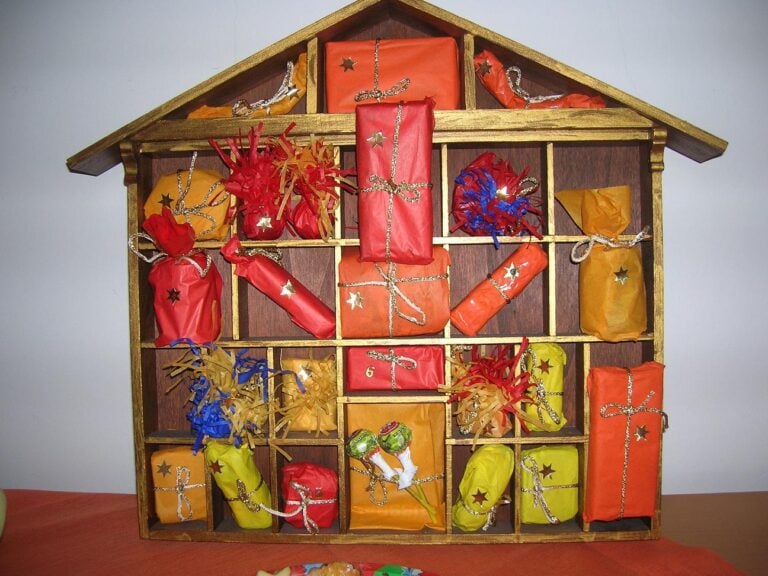
The covering is flexible. House Beautiful suggests leftover wrapping paper, kraft paper, washi, stencils or wallpaper. BBC Good Food asks for leftover thick wrapping paper, and English Heritage offers wrapping paper or colorful crepe paper. Extra sheets and recycled cardboard tubes left over from the batch work just as well for DIY advent calendars made from matchboxes and paper bags or homemade paper Christmas garlands.
Where to buy the snaps, and how the tube goes together
Snaps are the one part that is not already sitting in the recycling. English Heritage says of cracker snaps that “these can be purchased in some craft shops or online”.
House Beautiful points to the other route, the make-your-own Christmas cracker kit sold on the high street, and names Dunelm, Lakeland, Baker Ross and Marks & Spencer among the retailers listed as selling kits. Kits often include accessories, hats and jokes, with the buyer adding the gift.
House Beautiful also lists snaps as optional, so a set made without them still works as a table decoration with a gift inside.
The assembly runs in much the same order across the three guides. Decorate the paper while it is flat and easy to handle. Roll it around the tube and fix the edge with glue or tape.
The snap is the step to slow down for. It runs through the middle of the tube rather than sitting loose in the rolled paper, and the BBC Good Food method tapes it at the ends rather than gluing it along its length, so the two halves are still free to slide apart when the cracker is pulled.
From there, gather the paper just past one end of the tube and tie it with ribbon or string. Fill the cracker through the open end, then gather and tie the second end.
Fillers that are not cheap plastic toys
BBC Good Food opens with the complaint most people have about the shop-bought version: “Fed up of peculiar plastic shapes, bad jokes and pricey shop-bought Christmas crackers?”
Its answer is to fill crackers with thoughtful gifts from the kitchen, jokes that actually make you laugh, a festive fact and personalized party hats.
English Heritage keeps its suggestion brief, asking for a small gift: something sweet, a puzzle, a little message, a short poem or a joke.
House Beautiful lists tissue paper hats, toys, games and jokes. Toys do appear on that list, so the case being made is not against toys in general, only against the molded plastic trinket that nobody keeps.
Points worth keeping in mind when filling a set:
- Every filler has to pass through a toilet roll tube, so keep it small and flat.
- Jokes and festive facts can be written out by hand, one per guest, using simple festive hand-lettering styles for cards and place settings.
- A short poem or a message per person turns the crackers into place settings.
- Kitchen gifts, as BBC Good Food suggests, can come from what is already in the cupboard.
- Tissue paper hats, from House Beautiful’s list, can be made at the same time as the crackers.
For a sense of how far the format stretches, English Heritage notes the Guinness record for the world’s longest cracker at 63.1m, made in 2001 by parents of students at Ley Hill School.
Featured image and Pinterest pin: two foil-wrapped Christmas crackers. Photo: Cgros841, Public domain, via Wikimedia Commons.